


Ecommerce software ease your journey of selling online. When you select the right software, you can succeed in making a good impression on potential customers. You do not need specialized knowledge about coding or anything else to work with these tools.
There are plenty of eCommerce solutions available and choosing one might be tricky. This is why we have compiled a list of the top eCommerce software. Their features have been discussed in detail. You can pick one per your requirements.
Table of Contents
1. Kartra1. Kartra
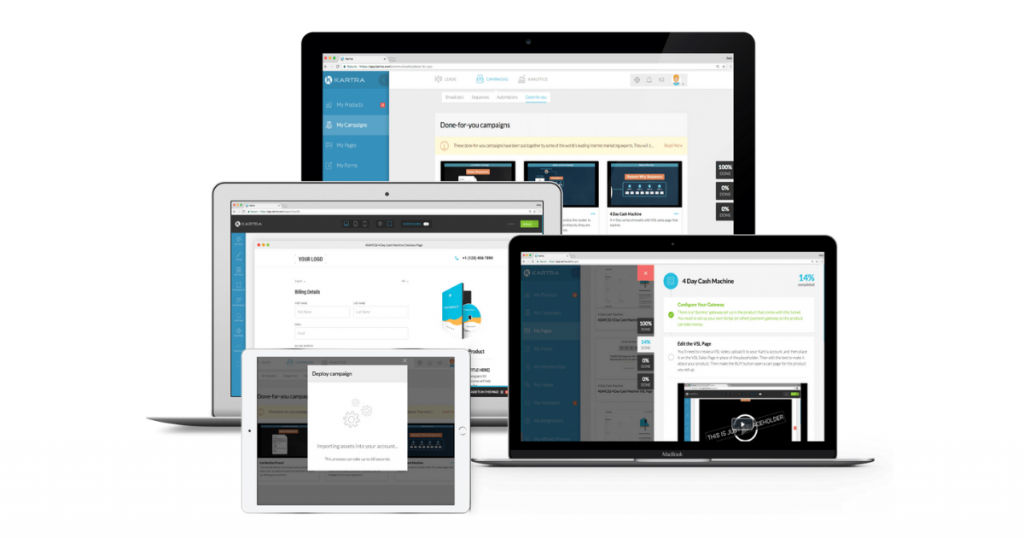
Kartra is a cloud-based software that allows companies to develop, launch and administer e-commerce platforms, helpdesk platforms, and marketing campaigns. You can create personalized and customized web pages with the help of this software.
Kartra offers you customizable templates and drag-and-drop functionalities. It has a leads management module that is capable of handling leads, customers, and prospects present in distinct locations. It can also allocate clients in different categories with the help of custom tags.
Some of the key features of Kartra include –
- Members portal
- Video marketing
- Automated forms for capturing leads
- Online payments using credit cards
- SMS and email marketing
Kartra has tools that can perform affiliate management that helps customers in tracking and recruiting affiliates. The eCommerce software can also track milestones and commissions for different advertising campaigns. Teams have the freedom to schedule sessions with their customers with the help of a built-in calendar.
2. NetSuite
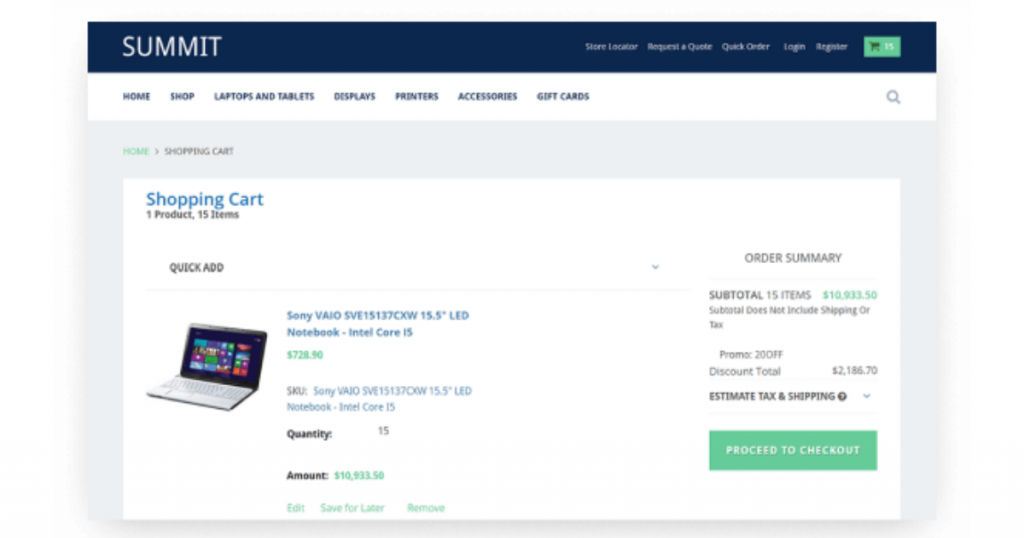
The vision of NetSuite states that eCommerce is not an individual channel but is now a core part of business operations. The software allows offline businesses to transition smoothly to an integrated eCommerce platform that connects eCommerce and the in-store POS.
All the components of the business such as financials, customer service, merchandising, inventory, and order management are integrated so that there is no communication gap between the online and offline stores.
NetSuite is the perfect option for pre-revenue and new startups. It can also be used by small and mid-sized enterprises to automate their core procedures and receive real-time insights into financial and operational performance. The software starts from 499 USD per month.
Some of the key features of NetSuite have been given below –
- 1099 Preparation
- Access permissions and controls
- Accounting and accounting integration
- Accounts Payable and Accounts Receivable
- Tracking of Aging
- Asset Lifecycle Management
- ACH Payment Processing
- Notifications and alerts
- Audit Trail
- Automated Scheduling
3. Algolia
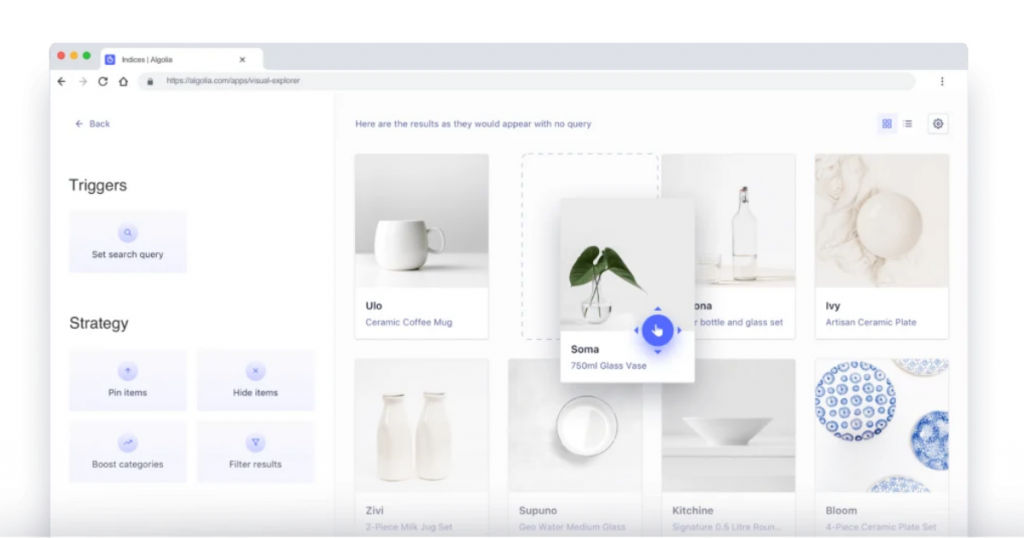
If you are looking for a search and discovery API platform, then you should go for Algolia without having any second thoughts. The software lets you create composable and powerful experiences with the help of configurable rules and artificial intelligence.
Algolia Search enables customers to design and execute their own individual search experiences with the help of a design language that they choose. There is a tool called Algolia Recommend which is an excellent API that lets you add “frequently bought together” along with “related products” to the eCommerce platform.
Adding these two elements requires only six lines of code and can be done easily. Algolia takes the user experience to a whole new level. This is what makes it one of the best eCommerce software in 2021.
4. Zoho Commerce

Zoho Commerce is a unique eCommerce software since it allows companies to create their own eCommerce platform or website, track inventory, manage the entire shipping process, process incoming and outgoing payments, accept orders, and much more.
You do not need to be a coding expert to avail the benefits of Zoho and can take advantage of the many ecosystem integrations that Zoho has to offer. The eCommerce platform also lets businesses market themselves without any hassle.
Zoho Commerce has a presence in more than 30 countries which means that it is trusted all over the globe. They have plans for all kinds of needs and work for all kinds of budgets. Their plans are very competitive and fulfill almost all kinds of requirements.
Zoho Commerce can serve the need of new entrepreneurs, small and mid-sized enterprises, eCommerce startups, and big companies as well. The basic plan starts from 22 USD per month and there is no free version. However, you can go for a free trial if you wish to have an understanding of the whole thing works.
Some of the crucial features of Zoho Commerce have been listed down below:
- Management of all channels
- Customer Relationship Management or CRM
- Maintenance of customer accounts
- Data security
- Management of inventory
- Orders processing and management
- Product configurator
- Promotions management
- Marketplace integration
- Email Marketing
5. Shopify
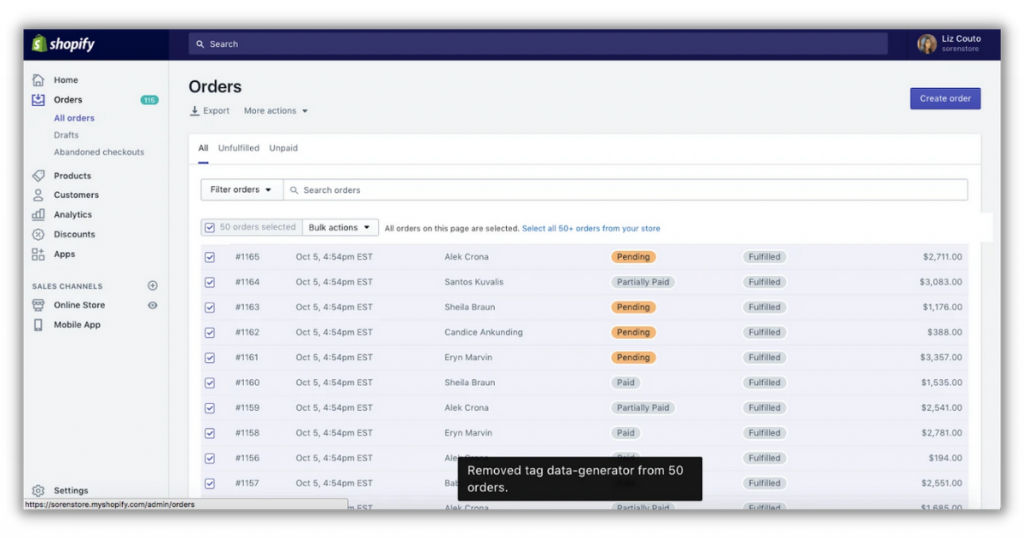
Shopify is one of the top cloud-based commerce platforms that use multiple channels and is an ideal choice for small-scale and medium-sized companies. Merchants greatly benefit from the software and use it to design, build, and administer their shops present in various sales channels.
These sales channels include social media, web, brick-and-mortar sites, mobile, and pop-up stores. Merchants also get a robust back-office along with an individual view of their company.
Some of the key features of Shopify are –
- Management of all channels.
- Catalog management
- Management of multiple stores.
- SEO management
- Email Marketing
- An effective loyalty program
- Shopping cart
- Customer accounts
- Promotions management
- Returns management
6. Wix

Wix is among the leading tools used for building websites. You might be hearing about a lot of this software due to a large amount of advertising than it does on YouTube and other platforms. If this is the first time you are hearing about Wix, you should know that the software is very intuitive.
Wix is one of the most reliable platforms and you won’t face any difficulty while using it. All these make it one of the top eCommerce software companies. They provide you with an amazing set of features without charging an exorbitant price. You get the power to execute a whole range of advertising campaigns and that too in real-time.
Wix can integrate itself with POS, boost sales, and provide the necessary freedom that is required for proper customization.
7. Magento
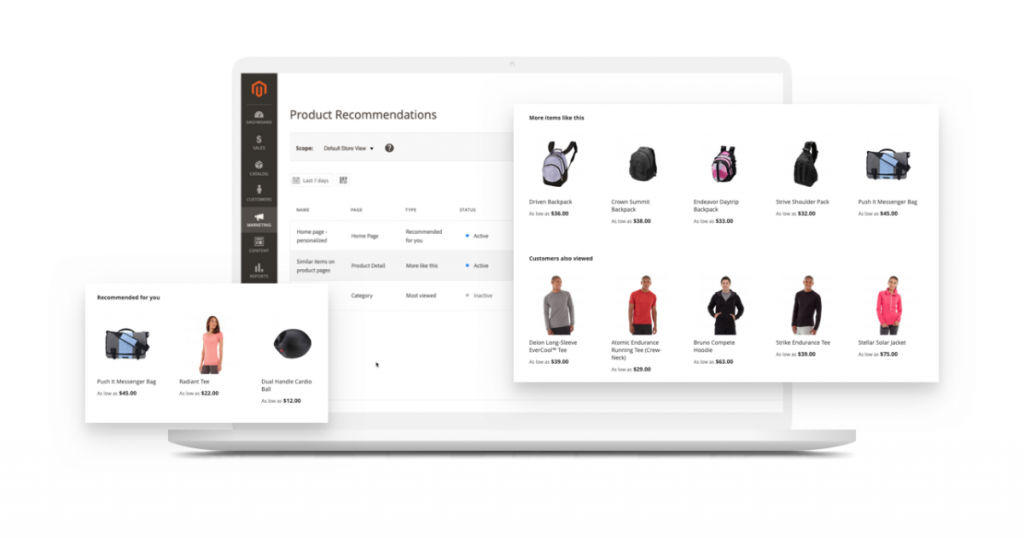
Magento was developed by Adobe. It is one of the top providers of cloud commerce innovation solutions for merchants and companies for both B2B and B2C sectors. It has a robust digital commerce platform which is better than many of its competitors.
They have a wide range of cloud-based omnichannel software that enable merchants to perform a seamless integration of virtual and in-person shopping cultures and experiences.
Some of the key features of Magento include –
- Customer accounts
- Returns management
- Management of SEO
- Shopping Cart
- Loyalty Program
8. BigCommerce
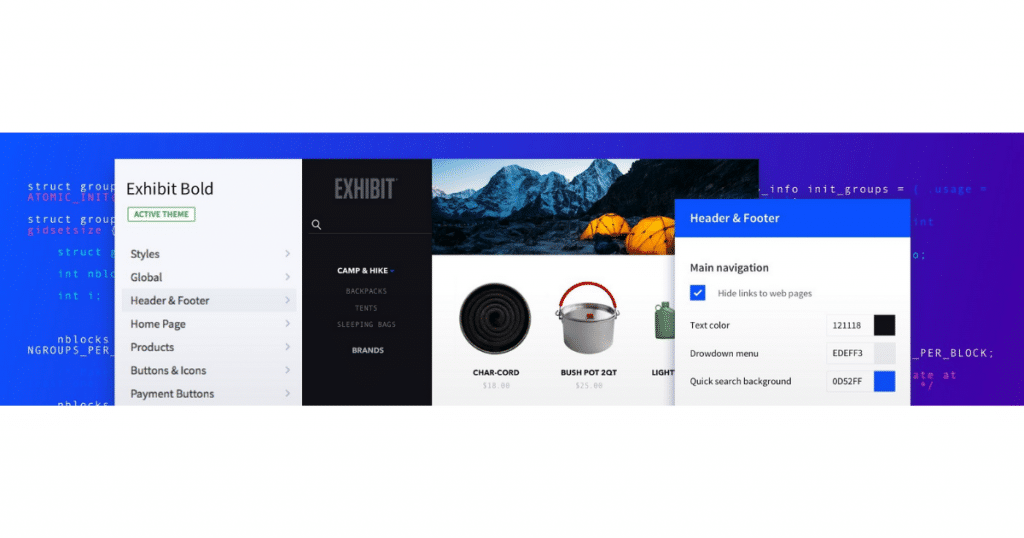
BigCommerce lives up to its reputation and offers everything that you would expect from a high-quality eCommerce platform. Its package is also very easy to use. The initial stages of BigCommerce are very similar to those that you would go through while using Shopify.
The entire process is quite simple. You just need to register at BigCommerce.com and complete the step using the setup wizard. The setup wizard is essential for setting up your online store in the way you would like it to be. After these steps, almost all of your initial work is done.
With BigCommerce, you have the option to sell a variety of products. You can also play around with multiple parameters for describing your product portfolio. You have a lot of themes and store designs to choose from. There are some free designs as well if you want to save some money.
Some are of the opinion that BigCommerce has the best templates out there. They have a modern look and appear to be very professional. The pricing is almost similar to Shopify except that you do not get a 9 USD plan. Most of the features of the eCommerce software are built-in.
BigCommerce provides marketing tools that are a lot more advanced than the rest of the platforms. It can be considered as the next best alternative to Shopify when it comes to eCommerce software. If for some reason, you don’t like Shopify, you should go for BigCommerce.
Both Shopify and BigCommerce have almost the same features and the initial stages of both are also similar.
Conclusion
We thoroughly covered some of the leading eCommerce software available in the market for the year 2021. All of them will deliver good results for your company however you should choose the one that can better serve your needs.
If you wish to create a good website for your company, you can check out this list of the best website builder software.
Also read:
• Top 5 E-Commerce Pricing Strategies to Drive Sales
• 5 Best Free Website Builder Software That You Can Use in 2021
