

The past few years have seen a dynamic change in the way businesses function with more and more focus on improving efficiency and productivity while cutting down efforts on mundane and repetitive tasks/processes. This has led to artificial intelligence (AI), machine learning (MI), and robotic process automation (RPA) becoming the most sought-after technology for businesses of all shapes and types. RPA in particular has become quite an integral part of the majority of the businesses, and this is not surprising considering the fact that according to some studies in 2018, RPA was one of the fastest-growing segments with estimated revenue growth of 63\%.
Table of Contents
What is RPA?
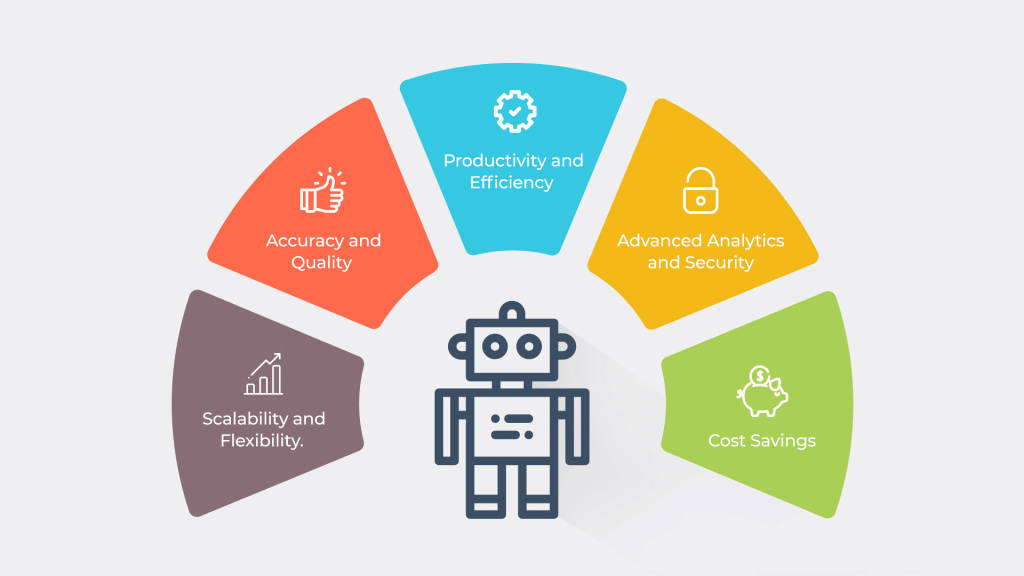
Robotic process automation (RPA) is a technology that helps businesses quickly build, deploy, and manage the software bots that interact with various digital software and systems. These software bots are designed to emulate various human actions, such as understanding what is displayed on the screen, navigating the systems, identifying and extracting data, completing the right keystrokes, and more. In short, RPA helps businesses to automate their various processes/tasks to make them more efficient and productive.
With its high adoption rate, it was expected that RPA implementation would successfully help businesses reach their targeted revenue growth within no time. However, according to the survey “The robots are ready. Are you?” by Deloitte, the scaling of RPA to enterprise-wide use has been extremely low. In fact, several studies have shown that more than half of the RPA projects do not take off successfully. Though RPA is highly hyped up, is it really worth investing in? According to this research, 78\% of the respondents who have invested in RPA are expected to increase their RPA investment significantly in the next three years.
So, why are more than 50\% of the RPA projects at risk of failure? Why have only 3\% of the surveyed businesses been able to scale their RPA projects successfully? There are several factors that have contributed to these low success rates of RPA implementation, such as:
- Inadequate skills and knowledge about RPA
- Lack of proper communication between different teams
- Choosing incorrect processes for automation
- Having unrealistic expectations
- Complexity-levels are high
The Covid-19 pandemic has shown how crucial it has become for businesses to be flexible and adaptive to such uncertain business scenarios. With automation being the keyword, investing in RPA is just a matter of time for all types and sizes of business. But investing in RPA is not the only step, you also need to ensure that it is successfully implemented, and you are achieving the desired targets and goals.
How to Ensure Successful Implementation of RPA?
Implementing your RPA projects is not an overnight task, rather, it involves careful research and planning. To make it easier for you, we have listed the six key steps that you need to take into consideration to ensure a successful RPA implementation.
1. Choose the right process
Not every process/task can or should be automated, which means that you need to first identify and evaluate the processes where RPA can be implemented. You need to conduct a thorough analysis of all the various processes to find your ideal process for automation. This is definitely a time-consuming, challenging, and, in some cases, costly step as well. Hence, you need to first prepare a centralized framework that will help you to align the RPA objectives with your organization’s strategic objectives. Having this centralized framework will help in the development of your RPA implementation, allow you to scale enterprise-wide, and maintain high levels of automation maturity. Below are a few questions that should be taken into consideration while identifying and determining the right processes:
- What are the number of transactions that can be performed without any manual intervention?
- How much manual effort or resources are required to perform the repetitive tasks?
- What is the scope of digitization for the process and its sub-processes?
- Are the rules capable of being programmed and mechanically defined?
- What is the importance and relevance of the process in the overall workflow structure?
- What are some of the possible roadblocks that would prevent you from gaining the automation benefits?
You would also need to focus on key factors, such as cost-effectiveness, data privacy, compliance requirements, etc.
2. Clear goals and objectives
You need to set clear goals and objectives before you start your RPA implementation to ensure that the end result is positive and successful. A plan without any defined goals will result in failure. Apart from helping you in choosing the right processes, the questions listed above will also help you to define your goals and help you stay on track. The objectives should also be clearly communicated to all the stakeholders involved in the project. You also need to set specific milestones with measurable objectives to understand and track the progress of your RPA implementation. The primary objective of every RPA project is to benefit from all the advantages of automation as quickly as possible. In order to do so, you need to ensure that the processes you choose are rule-based, have high volumes and frequency, can be measured, involve manual and repetitive tasks, have readable inputs, etc. Once you have your goals and objectives locked, it becomes easier to keep your RPA project on the right path and ensure its successful implementation.
3. Track progress through performance metrics
It is not sufficient only to implement and start your RPA project, you also need to identify the key performance indicators (KPIs) and measure the performance of your RPA. These metrics will give you insights into the financial, operational, and business impact of the RPA. You can also use key information, such as tool utilization, employee retention rate, cycle time, etc., to create awareness about the benefits of using RPA within the organization. Measuring the performance is one of the best ways to gauge the success of your RPA implementation. Different organizations will define different metrics; however, below are some metrics that are common across different types and sizes of businesses.
- Metrics to measure the impact of RPA deployment on back-office processes.
- Metrics to determine whether the employee’s productivity has increased due to the implementation of RPA.
- Metrics to calculate the accuracy of the final production and whether or not it has reached 100\%.
- Metrics to measure how well the bots are compliant with the various rules and regulations.
These and more specific metrics will help businesses to identify any gaps quickly and in a timely manner. It is also a great way to fix any issues so that the implementation of RPA happens in a smooth and streamlined way. It is also recommended that these performance metrics are carried out at specific intervals to ensure the successful continuity of the RPA project.
4. Build better and effective collaboration between business units
When we talk about a successful RPA project, it requires the involvement of people from various business units like IT, accounting, finance, procurement, HR, etc. Having the right communication channels is extremely crucial in ensuring that the implementation goes off smoothly. It is also important to have timely communication so that every person involved is aware of what is happening. Before you think of implementing RPA, you need to have clear communication with everyone – right from the company’s leadership team to the associates. Everybody involved should know why a process has been chosen for RPA, what difference will it make, how will it affect their work, etc. Associates at the grassroots level may worry that automation might put their jobs in jeopardy. It is vital that you explain how the automation will work in their favor so that the RPA project is accepted with an open mind. All this will be possible only if there is clear communication and timely collaboration between members of different business units. When you have a unified team working towards the same goals and objectives, it will definitely result in the successful implementation of your RPA project.
5. Create process documentations
Having thorough process documentation is key to the successful implementation of your RPA project. It is highly recommended to create a Process Definition Document (PDD) which will explain in detail how the RPA will work for the chosen process. The PDD can also be used to provide information about the benefits of implementing the automation process and the efforts and costs involved to get the work done by the bots. This documentation should be the joint efforts of all the key stakeholders – business unit owners, leadership, IT, etc., so that information regarding all the key areas is included. Each RPA project can have multiple documents, such as:
- An overview documentation about the initial concepts and process involved.
- Template documentation to ensure there is uniformity and standards in place.
- Document various workflows and place them in a central repository.
Once the documents are prepared, ensure that they are reviewed and evaluated by the subject matter experts to authenticate the information. Also, the documents should be reviewed on a regular basis to keep them up-to-date.
6. Enhance the skill set of your RPA team
The final step in making your RPA implementation successful is to ensure that your RPA developers and other members involved are constantly upgrading their skills. Since the field of RPA is fairly new, it is difficult to find highly knowledgeable and experienced members; hence, it is important that their skill set is enhanced as and when new technological developments take place. RPA is an ongoing process which means that there is always room to learn and grow. Enhancing and developing the skills of the team members will ensure that you are ready to tackle any issues or obstructions in your RPA implementation with minimal disruption and quick turnarounds. Not having the right skill set to deal with the issues can result in a delay or in some cases a complete stop of your RPA implementation journey.
Conclusion
There is no doubt that RPA is here to stay, and it is also true that you will face situations where your RPA implementations have failed. However, by following the above-listed steps, you can definitely increase the success rate of your RPA implementations. So, if you are thinking of automating your various business processes, do keep the above steps in mind.
If you are looking for some of the top RPA software and want to know what they offer, their pricing plans, technical details, etc., do check out SaaSworthy!
