

You might have recently invested in a new software system to boost your business’s operations and procedures. But the next big dilemma is how one should implement this new software system optimally and efficiently. Without a proper plan, implementing this new software system might cause a slew of problems and cause your system to be delayed.
Table of Contents
Why do we need a Structured Software Implementation Plan?
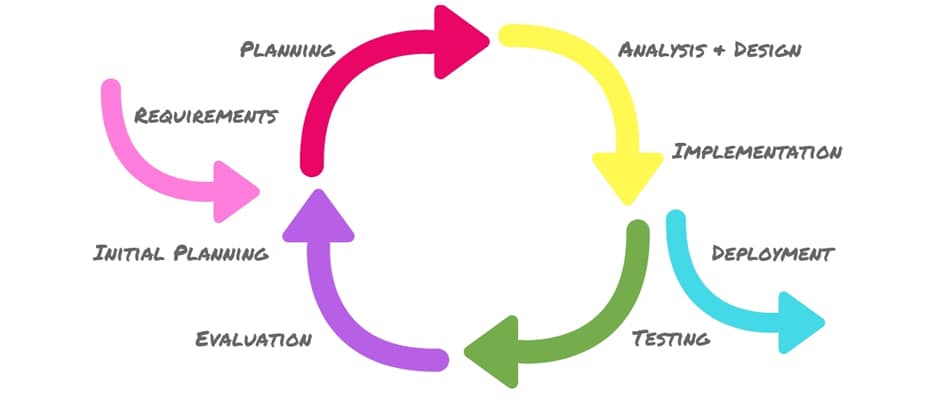
A proper and structured implementation plan will maximize the value of your new system so that you can quickly reap the advantage of the process and efficiency improvements that the new software provides.
Businesses that fail to develop a good software implementation plan may not be able to reap the full benefits of the new system, putting their time and money at risk.
We’ve put together a five-step software implementation plan to help you get the most out of your new system. Let us look at this software implementation plan in detail.
Keeping Vendors Accountable With A Detailed ‘needs Document’
Your vendor is a significant stakeholder in your software implementation plan. The magnitude to which your vendor will support the new implementation plan is determined by a variety of factors, but you should do your best to wring as much assistance as possible from them.
According to our study, getting the most out of your vendor and the new system starts during the selection stage.
To begin, create a “needs document” that you can share with the vendor. This can be accomplished by interacting with employees who will be using the new system on a regular basis:
- Include any day-to-day users as well as leaders who will consume the data generated by the software.
- Delineate who your stakeholders are.
- Examine how those stakeholders will be affected and when that impact will occur.
- Work together to create a list of features that the software must have in order to meet your requirements.
Amalgamate all of the information from your stakeholders and team into a ‘needs document,’ which you can share with vendors to ensure the new system meets all of your requirements.
This document should then be used during the implementation stage to identify the important points that will inform your vendor about which features regarding the software your employees will require the most instruction on.
Take Control Of Your Scope, Or It Will Eventually Control You
Your ‘needs document’ will assist you in identifying the features that your new system needs, allowing you to concentrate on the most critical aspects of the selection phase. Similarly, your ‘needs document’ can assist you to minimize scope creep during the implementation and training stages.
Scope creep is the danger of continually adding requirements and objectives to a project until it becomes a muddled mess that you can’t possibly work on. Start by prioritizing the features that need to be mastered first to support the long-term implementation of your new system. This will allow you to get the most out of your training while also providing benchmarks for regular check-ins. You’ll want to incorporate certain project management tools and best practices into your software implementation plan to avoid scope creep. There are a few solutions available here:
- Larger companies may want to consider implementing formal project management systems.
- To manage and allocate implementation activities, midsize enterprises can probably get by with free project management solutions.
- Google Sheets, Calendars, and other manual digital approaches can help small businesses keep to be organized.
These management tools will eventually assist team members to maximise software adoption and usage for their individual teams.
Assign Responsible Teams To Boost Software Implementation Plans
The implementation team will vary for each business, depending on the specific demands of the company and the scale of implementation.
Establish how many business units will be using the new system and the overall number of users to determine your requirements. The more users adopt the software, the larger your implementation team should be. However, forming a large team might lead to a slew of additional issues.
Begin with a two-person team:
Acting Administrator For The New System:
Choose an IT administrator or someone who spent time talking with the vendor or working with the software because they have already worked closely with the vendor.
Training Lead For The New System
Choose a new software training member who will use the system on a daily basis.
Larger companies may require an extended team, which comprises an IT employee to address demands and concerns related to configuration and integration with other systems, as well as a small group of end-users to test and provide feedback.
Encourage User Adoption With A Creative And Engaging Strategy
The next step is to devise techniques for gaining user approval and adoption of the new system.
You may fall behind on your implementation timeline or observe employees not using the program to its full potential if there isn’t positive engagement with the product.
The following are a few important steps to a successful software implementation:
Adopt A Tried And Tested Methodology For Establishing Change In Guidelines
This methodology will outline the measures that must be taken to achieve sustained user acceptance of the newly established system.
Our recommendation would be the ADKAR change model:
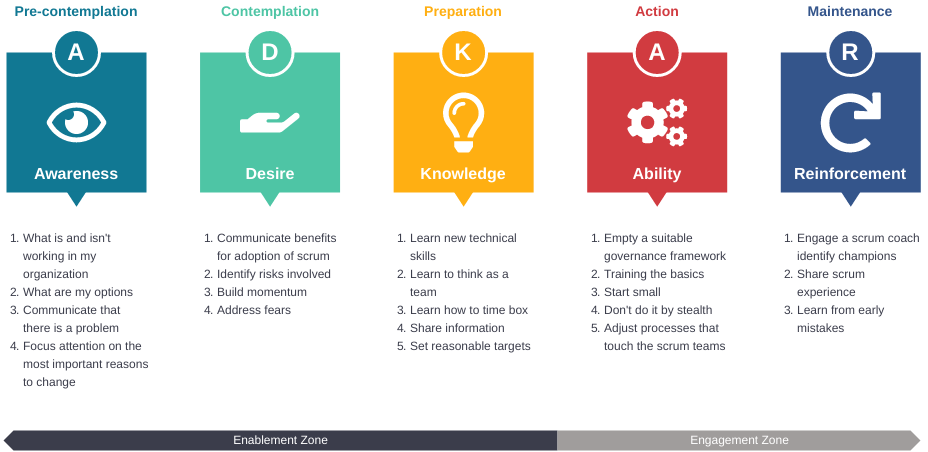
The ADKAR model’s steps can aid in the shift by tapping into the essential hard skills and emotional appeals for a smooth transition to a new way of thinking.
Outline Clear Goals That The Newly Implemented Software Will Help You Achieve
For this step, we’ll return to your “needs document.”
Determine which challenges the new software addresses and what results you want the software to deliver. Make your statement as specific as possible.
Users are held accountable when they have a definite purpose in mind, and it gives them a reason to use the new software efficiently.
Create Customized Implementation Messaging And Communication For Each Team
All the above-discussed points need to be properly communicated to the teams involved in the adoption of the new software. Personalize messaging at the team level to boost adoption in the long run.
Focus On Continuous Improvement
Continuous improvement relies heavily on training. The goal is to avoid the typical one-size-fits-all approach to training. Remember that not every user group will be able to devote the same amount of time to training, therefore providing stakeholders with a variety of training options.
To put your software implementation plan into action, try out different sorts of training such as:
- Lunch And Learns: In a casual setting, introduce workshop-style training. This is best suited for group learning.
- Peer-To-Peer: Request one-on-one coaching from your power users and champions to describe how the tool has improved their productivity.
- Open House: Host brainstorming sessions in which people share their successes and collaborate to address problems.
- Self-Training: Encourage users to make use of the vendor’s complimentary webinars and reference materials to gain a better grasp of the software.
Conclusion

Using the five important implementation processes outlined above, you can ensure that you get the most out of your new software. Recognize that the implementation process is a collaborative effort including IT leaders, implementation teams, system champions, your selected vendor, and the rest of the company. Ensure that your teams are engaged and communicating throughout the implementation phase. Now that you have your software implementation process, read our blog on Business Scenario Planning and make your business a success!
