

Every successful business has objectives. Some of them could be internal, such as building the proper rapport with employees and creating an excellent culture. Others are external, such as providing an exceptional client experience or launching the product. It would help if you put in the time, planning, and dedication to achieve these goals. To define your company’s objectives and then set out to achieve them, you’ll need to learn how to create OKRs. With clear goals and key performance indicators, everyone in your organization will know where you are headed and what to do to track advancement toward it.
Furthermore, OKRs help allows you to make your goals quantifiable and achievable.
Table of Contents
Why are OKRs Important?
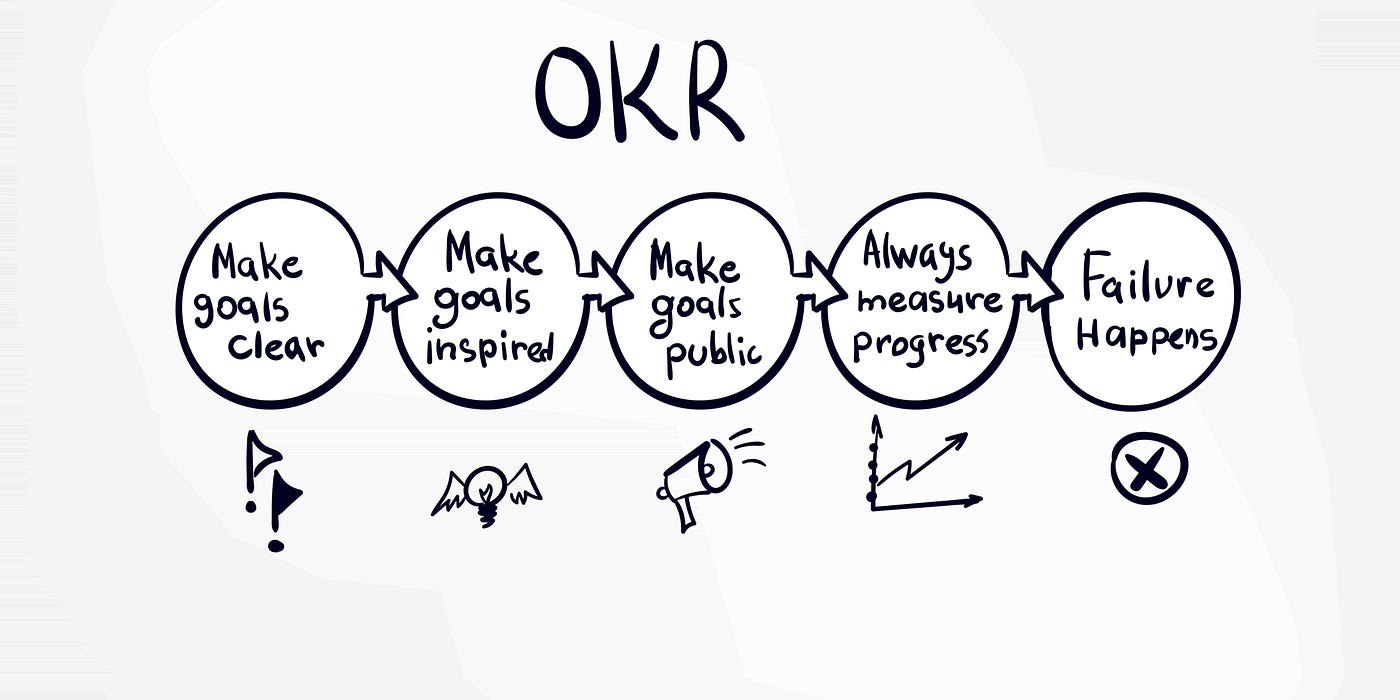
Objectives and Key Results (OKRs) are a straightforward but effective way to keep everyone in your business on the same page in the right direction and focused on important issues. With clear objectives and tracking your progress towards them, you can be sure everybody is striving toward the same goal and understands what is required to succeed.
The most important thing is that OKRs will help you understand and track your progress toward the overall mission of your business and vision.
In the current business environment is more crucial than ever to keep the focus of a laser on the most important things, and OKRs can assist you in getting there.
Why should you use OKRs?
What are your options If you don’t establish goals for your company?
How can you make improvements and make better decisions to increase your profits? This is precisely the goal OKRs can help you do.
OKRs are simple declarations that are clearly defined as well as specific and quantifiable, allowing you to track their progress and follow up on them quickly. The OKRs also stop objectives and priorities from overlapping by aligning them with the company’s goals. Let’s have a look.
Top 7 Easy Ways to Write Effective OKRs
1. Know your Company’s Mission
Writing effective OKRs begins with knowing the goals of your company first. If not, then how do you start?
When you have an idea of what you wish to accomplish in the short and long term, you can break your goals into achievable OKRs. Keep in mind that OKRs should not be separated; they must all work together toward the organization’s overall vision and objectives.
2. Ensure Accountability
A critical thing you could do when creating OKRs is to ensure that every person in your company is accountable for their performance. This implies that you require an approach to monitor developments and hold individuals accountable for their performance.
Another way to achieve this is to create a schedule of meetings for review and feedback or to talk one-on-one with managers or OKR owners.
The goal is to ensure everyone’s on the page and that the process is moving forward.
3. Draft your Goals to Share these with the Team
Draft a plan of goals for you to share with your group members for their comments. Remember that you’re no expert in all fields and what you believe can be accomplished at speeds of light could be a slower and more complex procedure and reverse. Your team comprises the individuals who are involved in achieving these goals. Therefore, they should be involved in creating real-world OKRs.
4. Set your Company’s Goals
Getting to this point is straightforward: what objectives you’ll need to establish for your business’s goals?
Don’t have too many dreams; focus on the most crucial ones at the beginning, and then move on to the next once you’ve achieved these.
5. Engage your Team in an Ideation Session
The next step in creating Effective OKRs is more than communicating your goals and ideas.
Through a brainstorming session with your team, after you’ve established your goals, your team will provide valuable insight into the key outcomes that could assist you in reaching these goals.
Additionally, brainstorming sessions typically encourage your team members to be concerned about the company’s OKRs just that you are and drive the responsibility of ownership and accountability.
6. Define your Primary Outcomes
Determining the key outcomes is as crucial as setting your goals. It is tempting to start with results, but be aware that goals are the foundation for significant developments. Therefore, it is essential to establish them first.
The most important outcomes are the route for getting there (objective) and must be helpful and straightforward to evaluate.
Also, it would help if you involved your team members in creating Effective OKRs. Because the experts are in their fields, they know which results will work most effectively to achieve a goal.
7. Plan your Initiatives
The last component of the effective OKRs recipe is initiative. Your goals define your final destination, your key outcomes will help you reach it, and your initiatives represent the actual work you intend to complete.
Initiatives should be specific and accurate (you can finish them).
What Makes a Good OKR?
OKRs must outline your organization’s main priorities within a particular period, typically between 30 and 90 days.
Additionally, they must represent an essential difference between growth, change and. Let’s look at what distinguishes good OKRs from poor OKRs:
1. Measurable
Good OKRs can be measured. It is essential to discover a method to gauge your progress towards your goal.
If your goal and the key outcomes aren’t quantifiable, you’ll be unable to assess whether your efforts were practical.
If you’re not sure how successful you’ve been, it’s impossible to determine whether your OKRs have been successful or which direction to move in the future.
2. Ambitious
Reducing expectations isn’t the best method to go about OKR planning. Great OKRs focus on inspiring extraordinary accomplishments, which is why it’s best to consider the big picture. It’s also important to pick goals outside your familiar zone. For instance, the purpose of stretching yourself may be able to accomplish something that you didn’t think you were capable of prior.
Set goals that are so difficult that they require the team to rethink how they function, ask difficult questions, and engage in unpleasant discussions previously deemed unimportant. If you give stretch goals, teams will wonder how far they can go.
3. Transparent
The OKRs you decide to set must be clear and understandable to everyone who reads the meaning behind them. Avoid using fancy terms.
Make your writing as simple and concise as possible, and write down the goals and primary results in a format that’s easy to digest and doesn’t require further explanation.
4. Time-Bound
When you write OKRs, you must be able to establish a realistic period for achieving them. Keep in mind that OKRs set for less than a month can suggest that the goal is not a job.
5. Track them Consistently
The critical element of OKRs is the way you utilize them. Reviewing them regularly helps you stay in the loop and inform your team of how they are progressing.
To get the best outcomes, create an OKRs review as part of your weekly meetings or in one-on-ones.
Conclusion
OKRs are a great tool to develop strategies and business growth; however, only if they are designed and utilized correctly. They must align with the company’s goals and the corporate vision and ensure that teams work toward a common goal. The OKRs need to be easy to understand and direct the organization in the right direction. Regular reviews of goals and significant results are crucial to ensure they are relevant to the business’s overall vision.
