

Aircall has announced the acquisition of Piper AI, a revenue intelligence and sales execution platform designed to help sales teams automate the work that happens after customer conversations.
The move marks an important step in Aircall’s evolution from a customer communications platform into a broader AI-powered revenue platform. For years, Aircall has helped businesses manage customer interactions across voice, SMS, and WhatsApp. With Piper joining the ecosystem, the company is expanding beyond conversations themselves and focusing on what those conversations are ultimately meant to achieve: moving deals forward and generating revenue.
Why This Acquisition Matters
Most sales teams today don’t struggle with a lack of conversations. They struggle with everything that comes after them.
Updating CRM records, writing follow-up emails, assigning next steps, preparing for meetings, tracking deal health, and forecasting pipeline performance all consume valuable selling time. According to Aircall, many sales representatives spend more than two hours each day on administrative work that takes them away from customer-facing activities.
Piper was built to address this challenge.
The platform captures sales interactions across multiple channels including phone calls, video meetings, email, WhatsApp, and even in-person conversations. It then converts those interactions into structured CRM updates, automated workflows, deal intelligence, and coaching insights.
Rather than simply summarizing conversations, Piper is designed to help teams act on them.
Bringing Revenue Intelligence Into Aircall
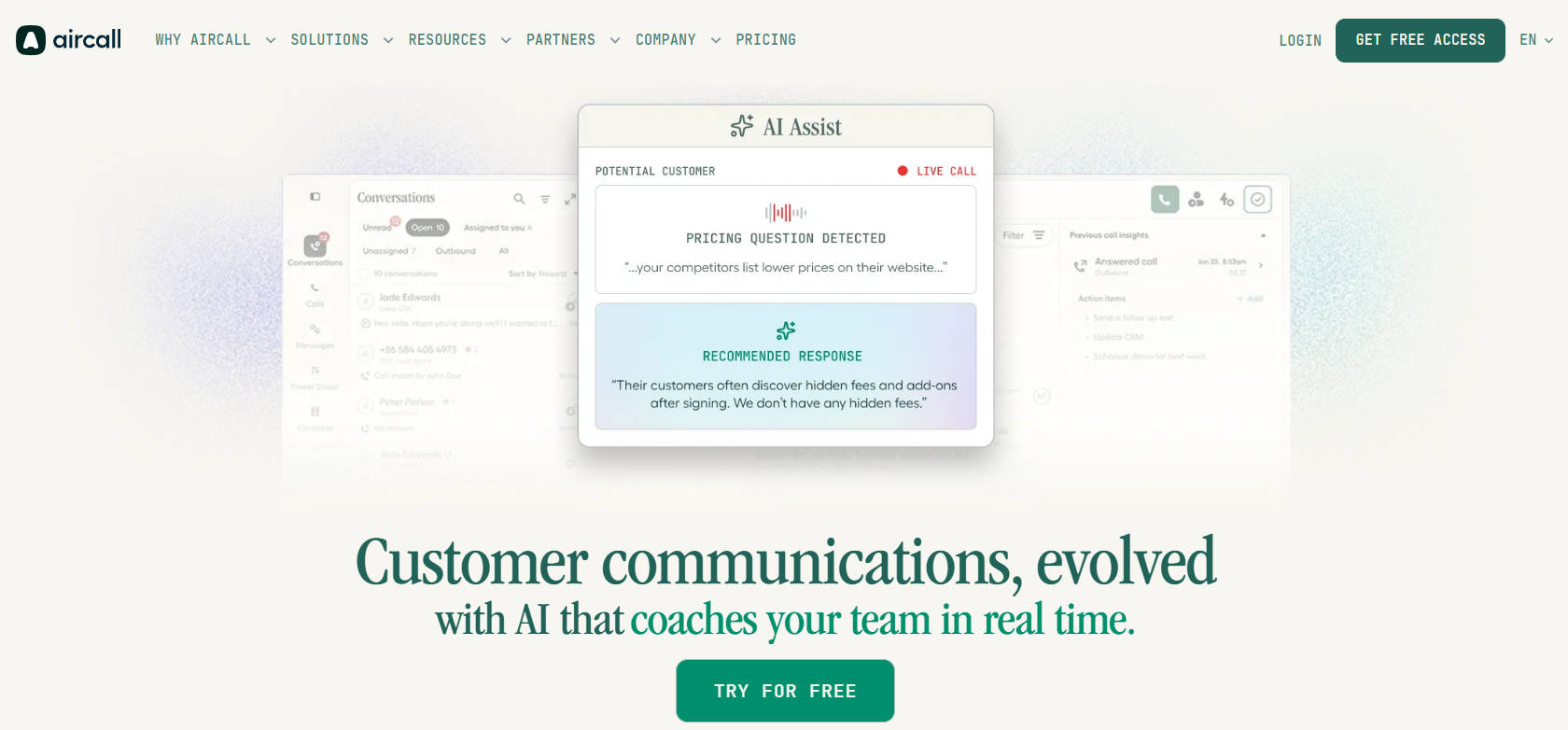
Aircall already provides AI-powered capabilities before, during, and after customer calls. Features such as account briefings, real-time coaching prompts, call summaries, and automated follow-up drafts have helped sales teams become more productive.
Piper extends those capabilities further.
The platform automatically updates CRM fields, tracks qualification frameworks such as MEDDIC and BANT, generates follow-up actions, scores opportunities, and monitors deal health across multiple communication channels. Sales leaders gain visibility into pipeline momentum, while representatives spend less time entering data and more time engaging with prospects.
Aircall summarizes the relationship between the two platforms simply:
“Aircall handles the conversation. Piper handles everything the conversation unlocks.”
What Customers Can Expect
According to information shared by Aircall, organizations using Piper have reported measurable improvements in productivity and forecasting, including:
- More than 50% reduction in CRM data entry time
- Approximately 50% improvement in forecast accuracy
- Up to 48 hours saved per sales representative each month
- Increased deal conversion rates through improved visibility into deal activity and pipeline health
These results reflect a growing demand for sales technology that not only captures information but also helps teams execute faster and more consistently.
Leadership Perspective
Commenting on the acquisition, Aircall CEO Scott Chancellor emphasized the company’s vision of connecting conversations directly to revenue outcomes.
According to Chancellor, AI becomes most valuable when it goes beyond summarizing interactions and helps sales teams turn every customer conversation into action, pipeline visibility, and additional selling time.
Piper co-founder Rodrigo Burillo Ocejo echoed that sentiment, noting that customer conversations contain the signals that reveal how deals are won and that those insights should lead directly to action rather than remaining trapped in summaries and reports.
SaaSworthy Analyst Perspective
The acquisition of Piper AI signals Aircall’s ambition to move beyond customer communications and become a more complete revenue platform.
While many conversation intelligence vendors focus on recording, transcribing, and analyzing interactions, Piper’s strength lies in connecting those interactions to CRM updates, pipeline management, forecasting, and sales execution. This gives Aircall ownership over a larger portion of the revenue workflow rather than just the communication layer.
From a market perspective, the acquisition is particularly relevant for mid-market sales organizations that often struggle with CRM hygiene, inconsistent follow-ups, and limited visibility into deal health. By combining communication data with revenue intelligence and workflow automation, Aircall is positioning itself closer to revenue intelligence platforms while maintaining the advantage of owning the communication channel itself.
For SaaSworthy, the strategic value of this acquisition is less about adding another AI feature and more about expanding Aircall’s role in the sales technology stack. As revenue teams increasingly look to consolidate tools and automate repetitive workflows, the combination of Aircall and Piper creates a stronger end-to-end proposition that extends from customer conversations to revenue outcomes.
The Bigger Picture
With more than 23,000 businesses already using Aircall globally, the addition of Piper strengthens the company’s position in the rapidly evolving revenue operations market.
The acquisition broadens Aircall’s value proposition from managing customer conversations to helping teams execute on them. As sales organizations continue investing in automation, forecasting accuracy, and productivity improvements, platforms that can connect communications, customer data, and revenue workflows are likely to become increasingly important.
For Aircall, Piper represents a step toward that vision—one where customer conversations do not simply generate insights, but drive meaningful business outcomes.
