


Have you ever used Netflix and wondered how it manages to give personalized movie recommendations to each user? Well, that’s because Netflix utilizes the capabilities of artificial intelligence (AI) to improve the platform. Not only that, but Netflix also uses AI to personalize thumbnails and predict bandwidth usage to improve streaming quality.
But what role does AI have to play in the software-as-a-service (SaaS) industry? As the fast-paced world of SaaS continues to evolve, there is increased competition and higher customer expectations.
A recent report surveying SaaS founders stated that companies that started 5 years ago faced an average of 2.6 competitors in their first year of business. This number was 4.8 for companies started 3 years ago and 9.7 for companies started 1 year ago.
AI, along with machine learning (ML), can therefore allow SaaS companies to differentiate themselves from the ever-growing list of competitors. In this article, let’s discuss the top 5 use cases for AI in SaaS.
Table of Contents
5 top use cases of AI in SaaS
SaaS companies like Oracle are betting big on AI and ML to help them differentiate from the competitors and carve out space in the market. Below are some of the popular use cases where AI is playing a strategic role.
1. Personalization
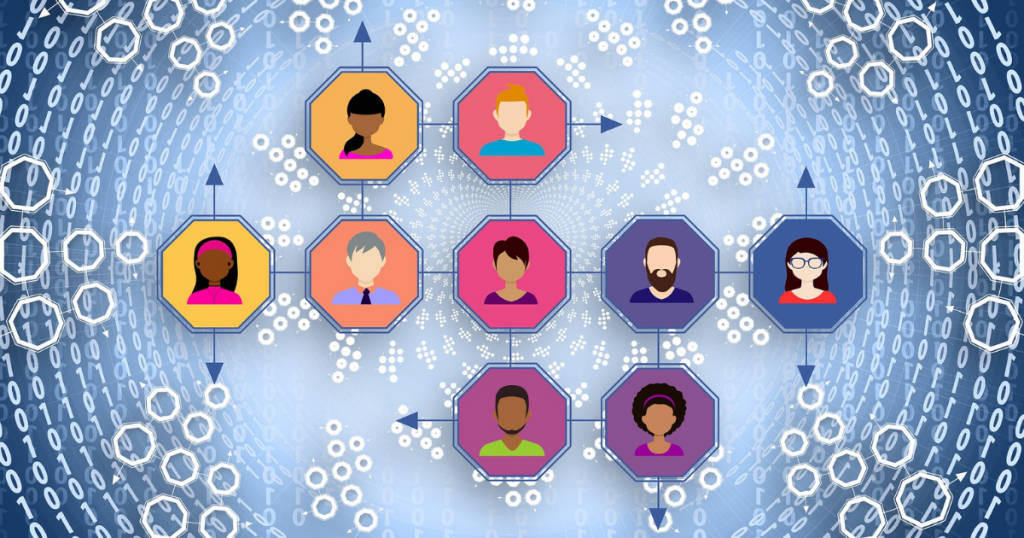
The evolving customer expectations suggest that brands should look forward to bringing personalization and hyper-personalization to SaaS.
As per Accenture, 91% of the consumers prefer choosing brands that can provide personalized offers and recommendations to them. Moreover, customers are not too hesitant to share some basic data if it means better personalization.
This is already being seen in many mobile apps and should be considered in SaaS too. AI and natural language processing (NLP) can be used in SaaS to learn from previous user interactions and configure the interface in such a way that it caters to individuals. You can also use AI in SaaS to analyze a massive amount of data generated by customers and use it to categorize customers into more meaningful segments.
The demands for personalization have also rippled into the B2B space where customers expect suppliers to personalize their offerings and understand their needs.
2. Automation
By utilizing AI, SaaS companies can automate previously manual operations. This helps reduce costs and eliminate the need to hire extra resources. AI-powered automation can be really helpful in improving customer-facing functionalities like training, onboarding, etc.
Intelligent automation can complete simple tasks on its own and offer automated responses. Think of chatbot software that solves customer queries, keeps the customers engaged, and replies to specific questions with an automated response having a link to the knowledge base.
Moreover, having 24X7 availability ensures that businesses are always available for customers. Automation can help SaaS companies stay on top of customer service requests and thereby ensure a good experience for each customer.
3. Predictive analytics
Predictive analytics is based on using historical data and analytical techniques (like data mining, statistical modeling, etc.) to make predictions about potential future outcomes. For businesses, predictive analytics can give the best assessment of what’s likely to happen in the future. It can be a powerful tool to forecast trends and behaviors.
AI built into SaaS can utilize predictive analytics to improve the user experience for SaaS customers. It can be used to predict user behavior for scenarios where the user starts to disengage.
Moreover, it can also increase sales productivity and opportunity close rates by predicting the users most likely to buy. Other predictive analytics solutions can help optimize deal size by predicting how much would a particular customer be able to pay.
4. Product search
AI in SaaS can help users search for a particular product. By analyzing different aspects like click-through rates, product sell-through rates, and user behavioral data, AI can help determine the product ranking for a particular user, thereby simplifying product search.
AI can also be used to mine data like query term semantics, user searches, or popular searches to understand user query intent. Having an understanding of this query intent leads to improved customer experience through personalized search results.
A great example of using AI for product search can be seen in Pinterest. Through its Chrome extension, Pinterest allows users to select any item in a photograph online. It then uses the image recognition capabilities of AI to share images similar to the selected item and present these to the user.
5. Cloud security

As per the State of Cloud Security 2020 Report, about 70% of organizations hosting data in the public cloud experienced a security incident during last year. This highlights the vulnerability of data stored in the cloud and the need for cloud security measures.
Cloud security is also a hot topic for SaaS companies because the traditional security measures tend to be static and obsolete.
However, AI gives SaaS the possibility of enhanced security because it is capable of automatically learning about new security threats. Such automated cybersecurity systems can work 24×7, without requiring the assistance of highly-trained security staff.
For example, Oracle recently added ML and AI to their cloud security services to facilitate automated threat detection.
Conclusion
As more and more companies embrace AI, there’s a new generation of SaaS products coming in the market that are faster, smarter, and more customer-friendly.
For SaaS companies, AI is helping them automate high-volume manual tasks, reduce costs, and increase cost-efficiency. To know more about various AI-based SaaS tools, visit SaaSworthy.
