

The world is changing at a faster rate and developed a new technology 3D printing technology .3D printing is a special type of technology which is also called additive technology which is used to manufacture parts for any object It is called an additive because it doesn’t need any block of material and even any mould to manufacture a physical object. It has a simple way of working just simply stacks and fuses layers of material and it is a very fast working machine with very low cost and can create very complex geometrical figures as well as very difficult figures in a fraction of time.
Right now these types of machines are used in many types of industries and are on top of engineering industries. The jump from 2D printing to 3D printing is a tremendous journey for human learning. Increasing numbers of people are using 3D printing. Around the world, additive manufacturing, also known as 3D printing, is used to create intricate parts and products layer by layer.
3D printing is playing an increasingly important role in global production, producing unique components for spaceship engines, medical professionals’ face shields and masks, and even inventive pen holders.
Table of Contents
Top 3D Printing Statistics
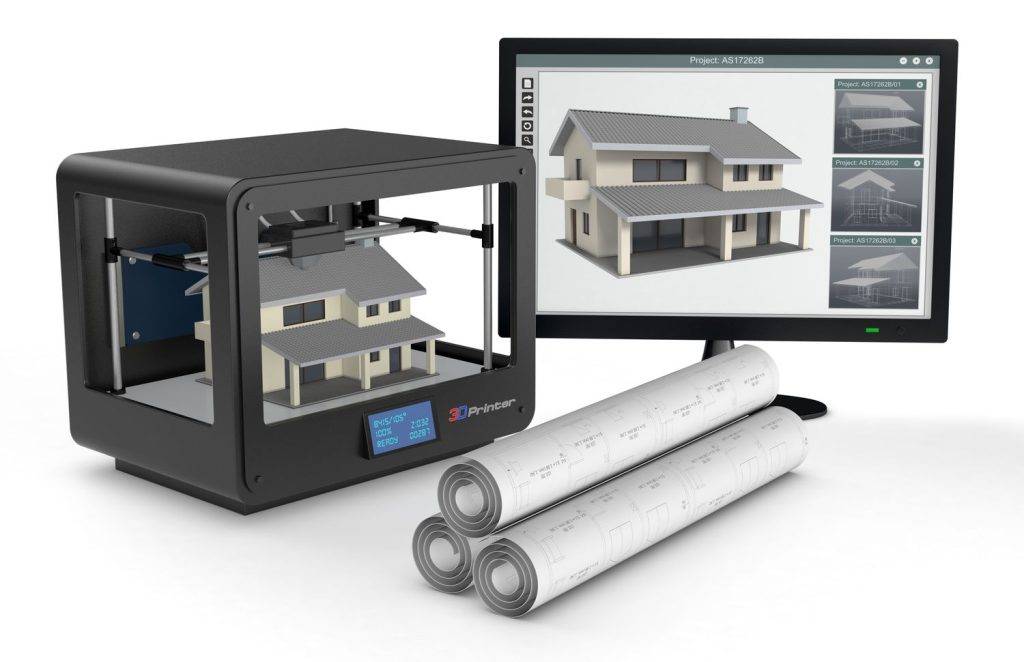
1. The market of 3D printing in the world has reached about $17 billion in 2023.
2. In countries like the USA mainly in North America the 3D printing market is a boom for the overall development of that area and it was 5.72 billion in 2021
3. There are many analyses that show that the growth in 3D printing will be very fast and will be around 18\% to 27\% in a year
4. The equipment cost for 3D printing is a little high but the rewards after working on these machines are a big amount
5. The market of 3D printing was valued at about 4.5 billion in 2021 while the materials market was only 1.7 billion which shows that 3D printing machine requirements are increasing day by day
6. Many companies and organizations have entered this market and the most famous 3D print manufacturers are Autodesk HP Inc. 3D systems desktop metal and proto labs. The market value of the order desk is noted as about 68.2 billion
7. Investors are always ahead of many people so they invested in this market of 3D printing back in 2018 in multiple startups which have given them a big amount return
8. There are many companies that have been associated with 3D printing back from 2019 and or investing a big amount in 3D printing in 2023
9. 3D printing has benefited the companies the most in the production methods and has changed the production method to another level there are about 70\% of objects 52\% value the quick iteration of products and 41\% claim its mass customisation abilities are important statistics.
Most Used 3D Printing Technologies
Fused deposition modeling (FDM) or fused filament fabrication (FFF), like HP’s Multi Jet Fusion, is the most well-established 3D printing technique on the market. In 71\% of the FDM/FFF-using businesses, the technology is used internally. The second most popular is selective laser sintering (SLS). Although 42\% of its users use it as an external service, this is still the majority.
• While faster technologies are quickly displacing slower ones, stereolithography (SLA) used to be the industry leader. A $1.6 billion estimate was made for the SLA market in 2020.
• As industries around the world deal with growing worries over the usage of plastic, 3D printing in metal is growing in popularity. 2018 saw a 65\% plastic and 36\% metal usage rate for 3D printers.
Market Share Insights for Key Companies
The need for 3D printing applications from the automotive, healthcare, aerospace, and defense verticals for manufacturing purposes is driving market participants to continuously improve 3D printing technology. By incorporating additive manufacturing into the processes for developing new products, the key players are recognizing opportunities for business change.
- Leading companies in the market, like Stratasys Ltd., are going past prototypes and embracing the agility that 3D printing can provide to the whole manufacturing value chain.
- The business uses additive manufacturing to swiftly and affordably build big end-use parts thanks to its cutting-edge line of 3D printers that incorporate Fused Deposition Modelling (FDM) and Selective Absorption Fusion (SAF) technologies.
- Some significant companies in the worldwide 3D printing market are:
STRATASYS LTD, MATERIALISE, ENVISIONTEC INC, 3D SYSTEMS, GE ADDITIVE, AUTODESK INC.
Advantages and Drawbacks
Faster parts delivery was cited as the main advantage of 3D printing by 66\% of businesses.
The use of 3D printing has a wide range of advantages. Though technology is still developing, its advantages are only expected to grow. Manufacturers use this technology because it produces parts more quickly than conventional machines. The speed is probably due to 3D printers being digitalized rather than being completely mechanical 61\% of businesses claimed that employing 3D printing for customized items was their primary motivation.
Using 3D printing, you may create entirely unique parts. Each 3D printer has the ability to create parts based on the data given. That makes it significantly simpler for businesses to manufacture. Since new machines would need to be created or modified to change the sort of products manufactured, this is different from standard manufacturing techniques Because 3D printing is more affordable, 55\% of manufacturers indicated they prefer it.
Depending on what is being produced, 3D printing may be more affordable than traditional methods or more expensive. However, for many businesses, 3D printing presents a less expensive alternative to conventional manufacturing.
Purpose of 3D Printing
Many countries are adopting the 3D printing method as it is very efficient and can build any type of product in just a very short period of time and can also build complex products. The companies are using 3D printing in aerospace automatic and healthcare industries as well.
Companies like Boeing use 3D printing material to make their plane interiors NASA also uses 3D printing technology for their satellites and engines and even the spacecraft. The interiors can be well designed and can be designed more beautifully just by 3D printing.
With the help of 3D printing in healthcare it was valued at about 1036 million in 2020 and it is increasing day by day and is top of level in 2023.
3D printing has not reached its limit until now but its demand is increasing a lot in industries. There are many complex products in healthcare that are difficult to build and 3D printing is making them very easy way and the faster way the requirement for these products is increasing in every healthcare area and is a lifesaver for many people.
There are a lot of materials that can be printed by 3D printers such as plastics metals and cement and even ceramics. Many engineers who have an interest in aerospace and building different types of products use 3D printing materials For example there are students who are building Iron Man and fictional characters just by 3D printing.
Limitations and Future Growth Prospects for 3D Printing
1. Many companies believe that 3D printing can make their supply chains more adaptable: In 55\% of the surveyed firms, logistics, transportation, and inventory could be streamlined. Today, owing to 3D printing, real objects may be sent as digital files.
2. Why do the majority of 3D printing users, 69\%, agree that the technology needs to be more dependable and more accessible? In fact, 29\% of those polled said they believed their lack of faith in the dependability of 3D printing to be a significant project-specific impediment.
3. Up to 71\% of companies say they lack the knowledge or training needed to use 3D printing technology efficiently. The 3D printing market is clearly constrained by the high cost of materials.
4. The adoption of 3D printing in several industries is being slowed down by two major limiting factors: speed and scalability. For instance, while vehicle manufacturing would require thousands of components each month, an aircraft business might only require 100. With regard to the key industries that use 3D, the automotive industry sees the slowest rise in widespread use.
Conclusion
The use of 3D printing is widely expanding US, and also in countries like India, UK. When it comes to 3D printing and its acceptance, the UK is still one of the leading countries.
The advantages of adopting 3D printing for producing a variety of products are being recognized by both producers and policymakers. These 3D printing figures demonstrate that the sector is still developing and has a long way to go. The companies will gain confidence in 3D printing by using it maximum working on its application and improving some faults from it.
As a result, every institute should implement a subject about 3D printing so that students will learn a new skill whose demand increasing at a faster rate. Printing speed will be another hurdle that the 3D printing industry needs to overcome to advance more quickly. Nevertheless, we’ll undoubtedly arrive soon given the rising investment in 3D printing firms.
