

Continuous Integration Software emerged as an advanced programming method aimed at assisting developers in avoiding significant integration issues. There will be more things to incorporate as you expand your project, and backtracking can rapidly become a time-consuming effort. Many tiresome activities are automated using CI Tools, and it’s easier to swiftly retrace before releasing a disaster, all while preserving a clear and tidy record of your project’s progress.
Table of Contents
Why do you need Continuous Integration Software?
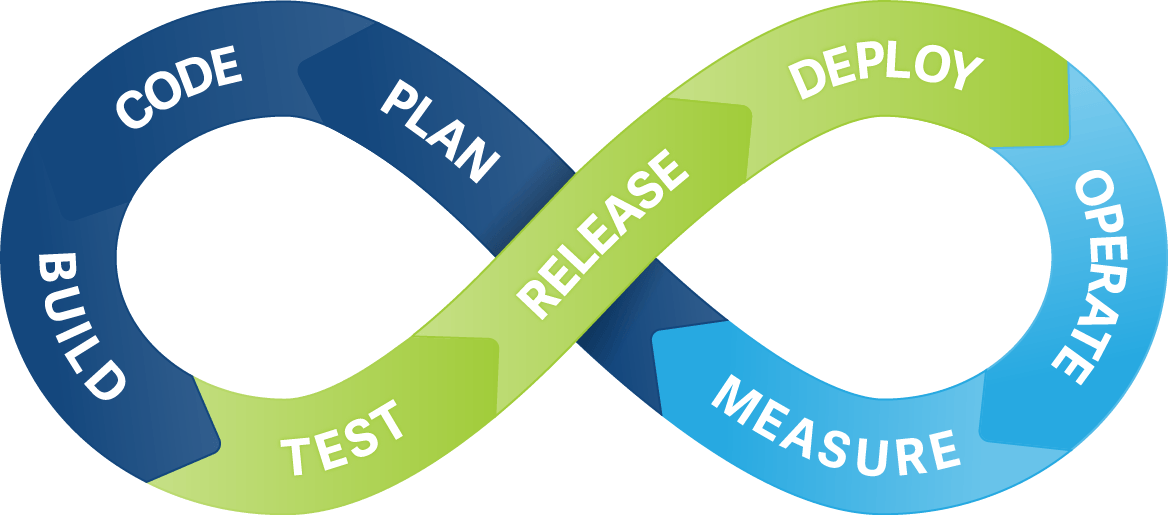
There are numerous advantages to continuous integration. A solid continuous integration configuration speeds up your workflow and encourages your team to push every change without fear of breaking something. Working with a better software release process is only one of the advantages. Continuous Integration also has a lot of business benefits.
If you test and deploy code more regularly, you’ll be able to spot problems and code flaws sooner, lowering the risk level of the project you’re working on. This means they’re easier to fix, and you’ll be able to do it sooner, saving you money. This will improve your communication by speeding up the feedback procedure.
It’s simple to share your code on a frequent basis when you have a CI process in place that’s connected to a Continuous Delivery procedure. This code sharing makes it easier for team members to see each other and collaborate. As a result, your organization’s communication speed and efficiency will improve as everyone is constantly on the same page.
The gap between the application in production and the one the developer is working on will be significantly smaller if you release code frequently. Your perspective on how to create features will almost certainly shift. When developing new features, you’ll want to focus on modest, incremental modifications because every minor change will be tested automatically and the entire team will be aware of them. As a result, you’ll make fewer assumptions because you’ll be able to build products faster, test them, and deploy them automatically for your users to view as soon as possible, allowing you to get useful feedback from them sooner.
List of top CI Softwares for Small Businesses
1. Bitrise
Bitrise is a Platform as a Service (PaaS) for Continuous Integration and Delivery (CI/CD) with a focus on mobile app development (iOS, Android, React Native, Flutter, and so on). It’s a collection of tools and services that can help you with software development and automation.
The installation process is simplified thanks to pre-built packages for Unix, Windows, and OS X.
A web-based interface for easily configuring your server.
Build and source code management, administrative chores, user interface, and platform administration are all custom plugins.
Build and test performance are improved when deployed across a network of machines.
2. Travis
Travis CI is a continuous integration platform that automates the testing and deployment of software. It’s designed as a platform that connects to your GitHub projects, allowing you to start testing your code right away. It’s one of the most popular continuous integration solutions on the market, with customers including Facebook, Mozilla, Twitter, Heroku, and others.
On GitHub, there is an open source project that is free for the public to use.
It’s as easy as signing up and adding a project to start testing.
Support for both languages ensures that your code runs well in all versions.
Verification of pull requests by an automated system
For quick notifications, it integrates with Email, Slack, HipChat, and other services.
Custom management with extended API and CMD tools
Free for open repositories, Enterprise for private repositories
3. Semaphore
Semaphore CI is a cloud-based continuous integration and deployment platform designed for speed and ease of use. Your team can remain on top of the latest issues and errors with Semaphore, long before they reach your users’ attention. Your tests are automated the instant you want to push out new code modifications thanks to a seamless GitHub integration.
Dependencies, units, coding style, security, and acceptance tests can all be customized.
Custom security and style standards make it easier to ensure that each new release is compliant.
Custom reviews for GitHub or Bitbucket pull requests, automating the build process
As you push new contributions, test various projects and branches at the same time.
Add custom configuration files and SSH keys, as well as environment variables.
Cost: Free for 30 days, then $25 per box for businesses.
4. CircleCI
CircleCI is a cutting-edge integration and delivery technology that has assisted hundreds of thousands of teams around the world in releasing code via build automation, test automation, and a comprehensive deployment process. CircleCI will boost productivity, expand easily, and build with the confidence that your team requires, thanks to its modern approach to the needs of current software teams.
Make an account, create a project, and get to work. Custom settings can be directly retrieved from your code by the platform.
Maven, Gradle, and other top-tier build technologies are all custom-integrated.
CircleCI will test your code with Django, Nose, RSpec, and a slew of other tools while you focus on releasing your next product.
AWS, Heroku, Google Cloud, and others are all seamlessly integrated.
CircleCI automatically installs dependencies into an isolated environment using language-specific tools like rvm and virtualenv.
Free, with premium options starting at $50.
5. Codefresh
Codefresh is a hosted continuous integration platform that prioritizes speed, efficiency, and simplicity. Codefresh allows your teams to test, create, and deploy directly from their GitHub projects. It’s also compatible with Bitbucket. Codefresh’s small collection of functionality combines integration and delivery, ensuring that your code is distributed correctly after test automation passes.
Sign up for GitHub, GitLab, and Bitbucket with a single click.
With native support for Docker instances, it’s highly customizable.
Infrastructure that monitors and scales according to your needs
Simple configuration file management allows you to get your workflow up and running quickly.
Setup processes with a simple user interface while keeping track of modifications.
Cost: Free, with a $49 starter package.
6. GitLab CI
@GitLab
GitLab is a code management platform for modern developers that is fast gaining in popularity. It has a single dashboard with capabilities for issue management, code views, continuous integration, and deployment. With GitLab, you can obtain a bird’s-eye view of how your project is evolving and maturing from conception to production. GitLab comes with pre-built packages for the most major Linux distributions, installs in minutes, has a user-friendly interface, and thorough documentation for each feature.
Easily integrated within the GitLab workflow
Scale your performance tests by adding more machines.
Build scripts written in CMD can be written in any language.
To check individual branches, create custom version tests.
Capabilities for manual deployment and easy rollback
Enterprise Edition is free, while Community Edition is not. Beginning at $16 per user
7. AppVeyor
AppVeyor is a cloud-based service for testing, creating, and deploying Windows applications that are only available for Windows. AppVeyor’s user-friendly technology allows Windows developers to finish their tests and deploy applications in the cloud or on a physical server. You can rapidly get up and running with a strong CI setup with pre-installed products like Visual Studio and your favorite SDKs.
Characteristics:
Select your GitHub project and get started! AppVeyor provides all infrastructure.
To keep your code nice and secure, create an isolated environment for builds.
Nothing else is required with this all-in-one continuous delivery platform.
SSD devices with specialized hardware for lightning-fast performance
Using granular techniques, create custom team environments.
Basic is $29, while Premium is $99
8. Buildkite
Buildkite has been in business for four years, offering software developers and their teams an easy method to set up a self-hosted continuous integration environment. The tool was created as a result of the founder’s unhappiness with the absence of self-hosted CI solutions that give simple functionality at a reasonable price. Buildkite’s rapid performance is now widely acknowledged by developers.
Characteristics:
There is an infinite number of languages and toolchains to choose from. Native support is available for Docker containers as well as Unix, Windows, and OS X computers.
Use GitHub, GitLab, or any other version control platform to keep track of your changes.
Distributed agents assist you in getting the most out of your machine’s capabilities.
Build pipelines can be triggered using a web interface.
9. Flosum
Flosum is a sophisticated CI server for software environments of any size. You will not be disappointed by the degree of performance that Flosum offers to your team due to the abundance of capabilities integrated expressly for developers. Built to support modern software stacks and platforms, pre-built installers allow you to get started in minutes.
Visual Studio has excellent support; tool versioning, framework testing, code coverage, and code analysis are all included without the need for additional scripts.
So you don’t have to duplicate your code, you can utilize an intuitive foundation that can reuse settings.
For structuring your project, you’ll need a version control system with a lot of features.
Detailed history records for all builds, failures, and any other modifications
On Amazon EC2, Microsoft Azure, and VMware vSphere, Flosum uses cloud computing to dynamically scale-out its build agent farm.
Cost: Free, but business plans start at $299.
10. CodeFresh
Codefresh is a Docker-native CI and CD platform that allows you to quickly generate, test, and deploy Docker images while also managing the whole container lifecycle.
Characteristics:
Every update in a branch or pull request generates Docker images.
Can be triggered from any CI service or used to monitor your Git repository.
Unit, integration, and user interface testing should all be done on a regular basis.
Inform your team about new feature implementations.
Can be set to deploy automatically at the end of any build process.
Cost: Open Source, free for one build; paying for three builds starts at $99 per month.
Conclusion
Poorly managed development initiatives will inevitably fail. It’s most certainly happened to you a dozen times. While creating code is enjoyable, maintaining code and dependencies can soon become a maze of its own, especially if your codebase and feature branches are constantly growing. We want to make developers’ jobs easier (and less frazzling). Continuous integration technologies are the most effective approach to de-stress your work.
