


The “Cloud” is no longer just a buzzword that we get to hear in tech magazines. It has become an inescapable part of our everyday lives. Cloud computing has changed the way we live our lives and conduct business.
Our interaction with cloud applications is so much so that by 2025, there will be 100 zettabytes of data stored in the cloud. To give you an estimate, 1 zettabyte is equal to a billion terabytes or a trillion gigabytes.
Businesses too are relying heavily on cloud computing. Most traditional on-premise IT infrastructure and software are being replaced by a cloud infrastructure. Almost 48% of businesses now store their data on the cloud.
With such high adoption of cloud computing, it becomes essential that we are aware of the different terminologies associated with it.
If you’ve ever wondered what exactly is cloud infrastructure then you are at the right place. In this blog post, we are going to talk in detail about what is cloud infrastructure. We’ll also discuss the various components of cloud infrastructure.
Table of Contents
What is cloud infrastructure?
Cloud infrastructure simply refers to all the components that are essential for cloud computing. These components can be the following or a combination of these –
- Networking
- Storage
- Software
- Virtualization
- Hardware resources
Cloud infrastructure includes all the tools needed to build a cloud and host applications within it. It can be referred to as a virtual infrastructure delivered and accesses via the internet.
We are going to talk in detail about each of these components. But first, let’s understand the importance of cloud infrastructure.
Why choose cloud infrastructure?
The cloud infrastructure can not only offer the same capabilities as physical infrastructure but also offers various additional benefits. These benefits include –
- Lower ownership cost
- Greater flexibility
- Better scalability
Moreover, cloud infrastructure is available in private, public, or hybrid cloud configurations. One can also rent cloud infrastructure components from a cloud provider. These benefits make cloud infrastructure a desirable choice.
Components of cloud infrastructure
The various components are integrated with one another into a single architecture that supports business operations. Typically, the following components collaborate with one another – hardware, networking, virtualization, and storage.
We’ve already discussed the core components of cloud infrastructure. Let’s discuss them in detail now –
Hardware
Although the cloud is virtual, it does require hardware as part of the infrastructure. The various physical hardware components that make up a cloud network can be located at multiple geographical locations.
Hardware components include networking equipment like routers, switches, firewalls, backup devices, servers, and storage arrays, etc.
Networking
The network includes physical wires, switches, routers, and other equipment. Typically, cloud network configuration has multiple subnetworks with different levels of visibility. The cloud allows creating virtual local area networks (VLANs) and assigns static or dynamic addresses as needed by network resources.
The resources in the cloud are delivered to users through a network that enables them to access services or apps remotely.
Virtualization
Virtualization is the technology that enables users to interact with cloud infrastructure using a graphical user interface. It happens when the virtualization software abstracts the available data storage and computing power away from the actual hardware.
Data storage and computing resources are often virtualized in cloud computing. This makes it easier for users to leverage these resources in a simpler manner. Virtualization may as well be the most important aspect of cloud infrastructure.
Storage
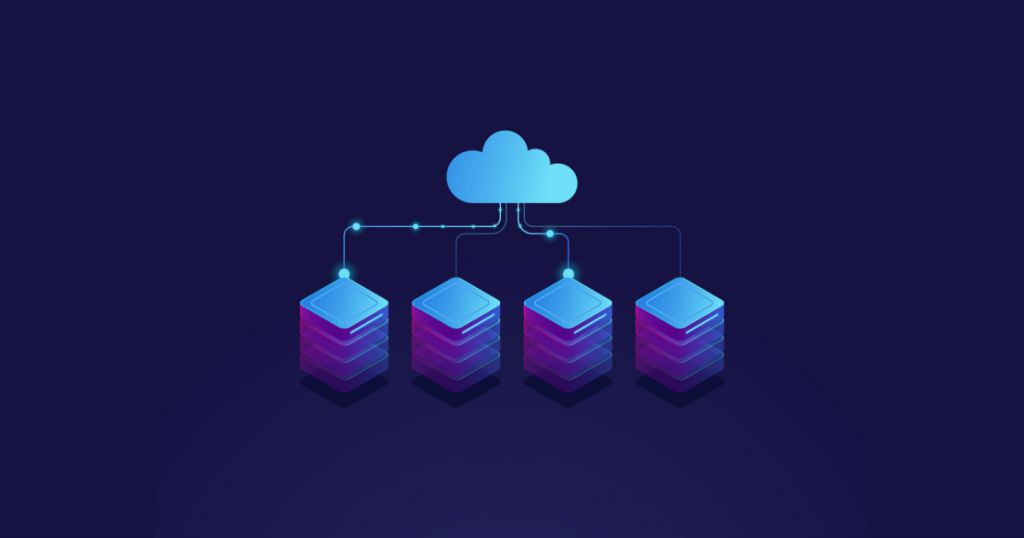
Storage services allow organizations to store and manage data on off-site servers instead of having in-house physical data centers. Various third-party cloud storage providers like Amazon, Microsoft, or Google can maintain and manage data with remote backups.
The data stored in these remote servers can be accessed via the internet or queried by other applications that are deployed in the cloud. Cloud storage can also be used to store cold data that is not actively used.
Different architectures in cloud infrastructure
There are three widely used architecture models in cloud computing. These are –
- Private cloud architecture – In this architecture model, the cloud infrastructure is accessed by only a single organization. A private cloud may be developed and maintained by on-site IT teams or it may be delivered by external service providers.
- Public cloud architecture – In this architecture model, the third-party cloud service providers offer cloud resources to customers in a multi-tenant environment. It leverages economies of scale and lowers the cost of computing power and data storage for customers. Although this model lowers the overall costs, it may also create some privacy concerns for users.
- Hybrid cloud architecture – In this architecture model, the private and public cloud systems interact with each other in a separate but connected system. Users or organizations that handle sensitive data may choose to maintain privacy by storing sensitive information in on-site servers. At the same time, they can choose to store the less sensitive data in the public cloud to lower costs.
Cloud infrastructure delivery models
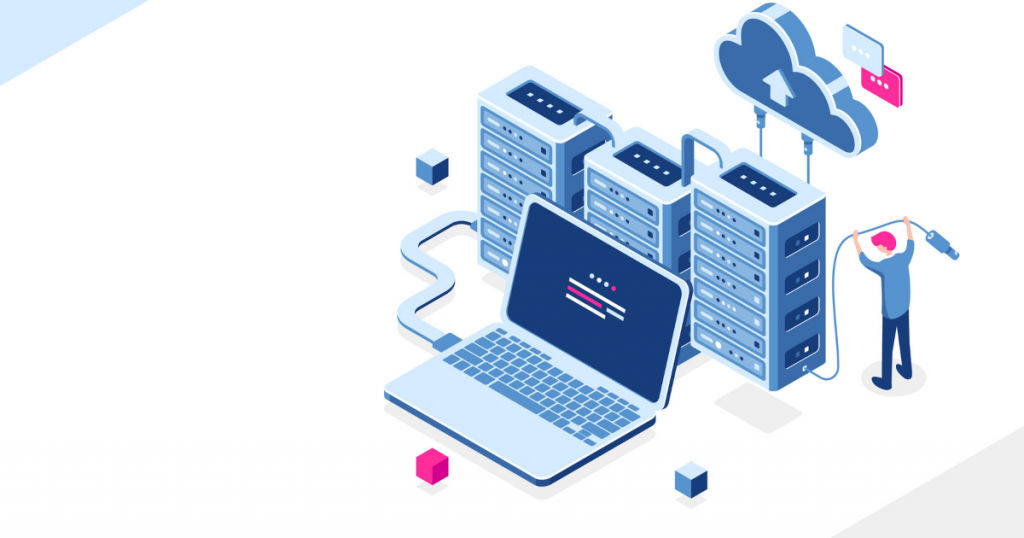
There are three main delivery models for cloud infrastructure and related services. These are –
1. Infrastructure-as-a-Service (IaaS)
In the IaaS delivery model, the cloud service provide offers networking, data storage, servers, and virtualization capabilities to organizations. The customer benefits by gaining access to as much data storage and computing power as they need. However, the customer/organization provides their own software platform to run on it.
2. Platform-as-a-Service (PaaS)
In the PaaS delivery model, the cloud service provider offers the complete cloud infrastructure including servers, networks, data, and virtualization along with a software platform (including OS, middleware, and runtime). The goal of the PaaS model is to provide customers the ability to develop, test, and deploy their own applications in the cloud, without having to deal with the cost and complexity of building on-site IT infrastructure.
3. Software-as-a-Service (SaaS)
In the SaaS delivery model, the cloud service provider offers a particular application/software through a web-based portal. This enables customers to avoid storing any application data on their local drive. All the application data is stored on remote servers that are handled by service providers. A SaaS model means that service providers are responsible for all aspects of the technology stack like maintaining infrastructure or the software.
Conclusion
We hope this article might have given you a good basic understanding of cloud infrastructure. We not only discussed what is cloud infrastructure but also talked about its various components, the need for cloud infrastructure as well as the key delivery models associated with it.
If you still have any questions related to cloud infrastructure or cloud computing in general, you can ask them in the comments box below.
If it is cloud software that you look for then SaaSworthy can be of help. As a SaaS review website, we help you make an informed decision when it comes to choosing a SaaS solution for your business.
