

IAM stands for Identity and Access Management. Likewise, the job of the IAM Software is to identify the right people and give them access to tools and data according to the needs of their job. There have been instances where the user identities of larger organizations have been distributed across web portals, cloud applications, or other virtual environments by default. Going without IAM software leads to such a predicament, and it is always a smarter choice to opt for it in these cases.
Table of Contents
What is the need for the IAM Software?
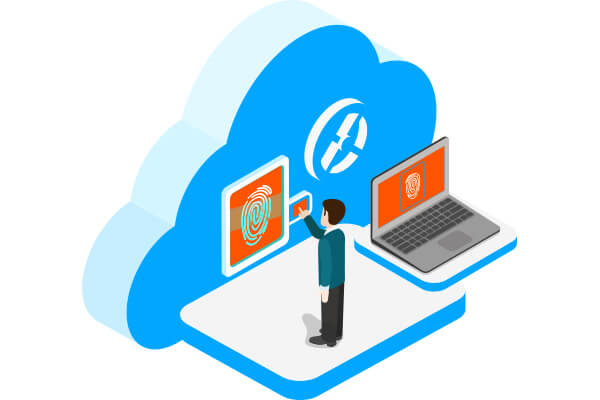
IAM not only ensures security but also increases the productivity of the employees. Conventional security systems generally have one point of failure, which is the password.
If a user’s password gets accessed, or worse, if the email entered for password recovery is somehow breached, not only the user profile but the security of the entire organization becomes vulnerable to unauthorized access.
IAM shortens these points of failure and bears a hand in catching the users with tools and preventing them from making mistakes.
IAM facilitates you with the IAM portal, which in turn helps in reducing the individual workload on your IT professionals.
It permits access to a specific set of tools only that is required by the employee, and their access can also be managed as a group or role instead of individually.
Is regulatory compliance improved by IAM?
Law, regulation, and contracts all have a role in security. Data security is enforced through data protection rules such as the General Data Protection Regulation in Europe, HIPPA in the United States, and the Sarbanes-Oxley Act in the United Kingdom.
Your users and company can ensure that the greatest levels of security, traceability and administrative transparency are practiced in your day-to-day operations with IAM.
The working procedure of IAM
In general, identity management software accomplishes two goals. IAM verifies that a user, piece of software, or piece of hardware is who they claim to be by checking their credentials against a database.
Traditional username and password solutions are less secure and adaptable than IAM cloud identity systems. Only the appropriate level of access is granted by identity access management systems.
IAM provides for limited slices of access to be portioned out, such as editor, viewer, and commenter in a content management system, rather than a login and password granting access to the complete software suite.
What is the difference between Cloud and on-premises IAM?
In earlier times, most of the identity and access management was handled by a server located on an organization’s physical premises, which was referred to as on-premises.
Gone are the days of on-premises IAM services, which are now handled by a cloud provider to save the business money on physical maintenance and to provide uptime, dispersed and redundant systems, and short SLAs.
What do the IAM implementation strategies include?
An IAM solution should be designed utilizing zero-trust principles such as least privilege access and identity-based security policies as a cornerstone of a zero-trust architecture.
Identity management at a centralized level
Because regulating access to resources at the identity level is a major principle of zero trust, having centralized administration of those identities can make this approach much easier.
This may entail transferring people from other systems or synchronizing your IAM with other user directories in your environment, such as a Human Resources directory.
Restricted access
Because identity security is so important, an IAM should double-check that persons who are logging in are who they say they are.
This could imply using multi-factor authentication (MFA) or a mix of MFA and adaptive authentication for accounting for the context of the login attempt, such as location, time, device, and so on.
Control based on policies
Users should only be permitted to execute certain tasks. An IAM should be developed to grant users access to resources depending on their employment function, department, or any other relevant attributes.
These policies, as part of a centrally controlled identification solution, can ensure that resources are secure regardless of where they are accessed.
Policy of Zero-Trust
A zero-trust policy means that an organization’s identity and access management (IAM) system is always monitoring and securing the identification and access points of its users.
Organizations used to function under the “once you’re in, you have access” approach, but zero-trust policies ensure that every member of the organization is always recognized and their access is regulated.
Privy accounts are protected
In an access control system, not all accounts are created equal. Accounts with special tools or privileged access to sensitive information can be assigned a level of protection and support appropriate to their role as an organization’s gatekeeper.
Training and assistance
IAM suppliers often provide customer service for the long-term health of your IAM installation and its users, as well as training for the users who will be most involved with the product – both users and administrators.
The IAM competition software
The IAM Competiton Software ensures a digital competition among various IAM software based on memory.
This allows users to run competitions among different software and use them accordingly to boost the performance of their businesses.
What are the tools needed to implement IAM?
Password management software, provisioning software, security policy enforcement applications, reporting and monitoring apps, and identity repositories are all needed to execute IAM. IAM tools include, but are not limited to, the following:
MFA
Your IAM provider will require more than one piece of confirmation that you are who you say you are if you use multi-factor authentication.
For instance, requiring both a password and a fingerprint is a common example. Facial recognition, iris scans, and physical tokens like a Yubikey are some of the other MFA options.
SSO
SSO (single sign-on) is an acronym for single sign-on. If your IAM solution supports single sign-on, your users will be able to log in once and then utilize the identity and access management application as a “portal” to the other software suites to which they have access, without having to log in to each one separately.
Some of the Best identity access management software 2023
OKTA
Okta is a leading independent identity provider. Okta Identity Cloud enables organizations to securely connect the right people at the right time to the right technology.
With over 7,000 built-in integrations with application and infrastructure providers, Okta gives people and organizations easy and secure access from anywhere, giving you the confidence to reach their full potential.
More than 10,000 organizations, including JetBlue, Nordstrom, Siemens, Slack, TMobile, Takeda, Teach for America, and Twilio, trust Okta to protect the identities of their employees and customers.
AUTH0
Auth0, founded in 2013 and acquired by Okta in May 2021 for $6.5 billion, is a respected alternative for developers who want to create a secure login experience for their personal applications.
It is a next-gen identity management platform for web, mobile, IoT, and internal applications. The software assigns permissions automatically based on a user’s role, affording less chance of error than manual assignments.
It also can provide access tokens to give users temporary access they might need.
IBM Security Verify
IBM Security Verify is an Identity-as-a-Service (IDaaS) platform that includes SSO, MFA, and rapidly standardized identity analysis capabilities.
It provides AI-based authentication and adaptive access decisions to prevent hidden IT activities among employees and prevent identities from being compromised.
There are options for passwordless authentication, which will become the next standard feature of the IAM system.
IBM also provides compliance and user lifecycle management to allow HR departments to easily create new identities when hiring new employees and delete identities when an IAM software engineer leaves.
Conclusion
After looking at all the reasons, you can easily understand why and how the IAM is so successful.
Apart from handling identity management, IAM also provides an accurate platform for sorting and securing data to make it even easier to assign access rights to user roles.
You can find out more about the IAM software from this blog by Saasworthy.
